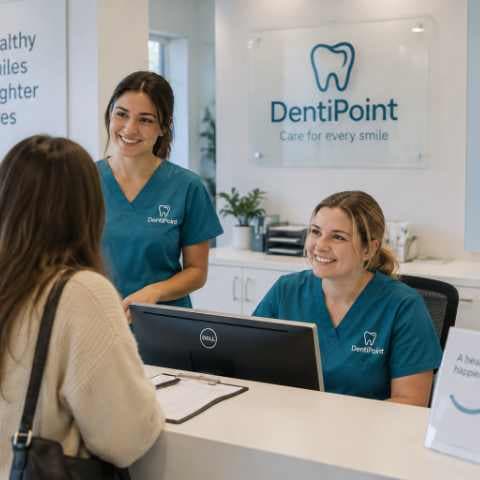
Dental reminders that go out on their own
- Email · SMS · WhatsApp
recorded at 09:40
An empty chair costs the same as a full one.
The nurse is still paid, the surgery is still lit, and the hour is gone either way. A reminder is a rounding error against it.
Two different jobs, often confused
- Before the appointment: Reminders
An email confirmation when they book, then a nudge before they're due by email or SMS, and WhatsApp where it is enabled. Sent automatically 24 hours and 2 hours before, in your branding, without anyone remembering to press send.
- After the appointment: Recalls
Bringing a patient back when they're due, rather than losing them quietly to the practice down the road.
- Your branding, not ours
Templates you can edit, with your name on them.
- Consent respected
A patient who opted out stays opted out. It's a field, not a promise.
More on reminders and no-shows
- Online Dental Booking System for UK Practices
A dental booking system for UK practices: patients pick a treatment, clinician and time, no password. Auto-confirm or approve, and take payment if you want.
- Dental Appointment Reminders: When to Send Them
When to send dental appointment reminders and recall notices, what to include, and how to keep them reliable without reception chasing. A UK practice guide.
- Dental No-Show Policy: Cut DNAs and Late Cancellations
How to set a dental no-show and late cancellation policy patients accept, with the reminders and rescheduling that back it up. A UK guide to chair time.
- WhatsApp Appointment Reminders for Dental Practices
How UK dental practices send WhatsApp appointment reminders: the GDPR and PECR rules, Business app vs Platform, Meta's per-message pricing and setup.
11
Reminder FAQs
Which channels can I use?
Email, SMS and WhatsApp. Most practices lead with SMS for the day-before nudge and email for the confirmation.
Can patients opt out?
Yes, and it's honoured. Consent lives on the patient record and nothing is sent to someone who has withdrawn it.
Can I change the wording?
Every template is editable, in your own branding. The default text is a starting point, not a straitjacket.
How dental reminders and recalls cut no-shows
Missed appointments are rarely a choice. Most are simply forgotten, and a forgotten appointment is a wasted chair, a patient whose care slips, and revenue you cannot get back. Reminders and recalls fix two different halves of that problem, and it helps to keep them apart.
Reminders vs recalls: two jobs, often confused
A reminder nudges a patient about an appointment they already have, a day or two before, so they turn up. A recall brings a patient back when they are due for their next check-up, on a clinically appropriate interval. One protects the appointments in your diary this week; the other keeps the diary full for the months ahead. A good system does both, automatically, so nobody at reception is working a spreadsheet of who to chase. Recalls have their own page: dental patient recall software. For timing and wording, see our guide to when to send reminders.
Channels and timing that actually work
Patients read a text far faster than an email, so DentiPoint sends reminders by email and SMS, and by WhatsApp where it is enabled, in your own branding, automatically 24 hours and 2 hours before each appointment. Recalls fire on the interval you set for each recall type or patient, so you can follow NICE recall-interval guidance: a low-risk patient is not chased too often, and a higher-risk one is not forgotten. Consent and opt-out are honoured throughout, which keeps you the right side of UK GDPR.
What this does to your no-show rate
Practices that automate reminders and recalls consistently report fewer DNAs and fuller books, because the reminder does the chasing and the recall does the re-booking. If you want the detail, our guide on reducing dental no-shows and DNAs walks through the numbers and the tactics, from deposits to short-notice waiting lists. Because reminders in DentiPoint are tied to the appointment in your diary, a reschedule moves the reminders with it and a cancellation stops them, so a patient is never nudged about a slot that has already changed. Email reminders are included on every plan; SMS and WhatsApp messages use message credit, and the pricing page shows how it is priced.
More on automation and membership
- Automating the Front Desk: How AI and Automation Are Changing Dental Practice Admin
A clear-eyed guide to dental practice automation for UK owners: what automation and AI actually do at the front desk (reminders, recalls, booking, payments, reporting), what they cannot do, and where a person still has to make the call.
- How to Reduce DNAs and No-Shows in Your Dental Practice: A UK Playbook
How UK dental practices reduce DNAs and no-shows: why NHS practices cannot charge for missed appointments, what the evidence says about who misses them, and a seven-step playbook of reminders, rebooking, short-notice lists and measurement.
- Dental Membership Plans Explained: NHS, Private & In-House Plans
Dental membership plans let patients pay a monthly fee for routine care. Here is how in-house and provider plans work alongside NHS and private dentistry, and what your practice needs to run one.